
Crete Chronicles: Falling in love Cretan pottery
Walk into almost any pottery workshop in Crete, and you are confronted with a rather lovely problem: there is far too much you want to take home.
I found myself doing exactly this at Keramion, a traditional pottery workshop in Margarites, where shelves were filled with bowls, jugs, plates, vases and other beautiful ceramic vessels, each slightly different from the next. Some pieces looked very traditional while others would sit perfectly happily in a modern kitchen, all different shapes and colours with hand-painted intricate decorations.
Pottery is everywhere in Crete, from enormous traditional storage jars standing outside village shops to tableware in shops and restaurants. It is so much a part of the island's visual identity that it can be easy to see it as another holiday souvenir: something pretty, practical and suitably Greek to squeeze into your suitcase.
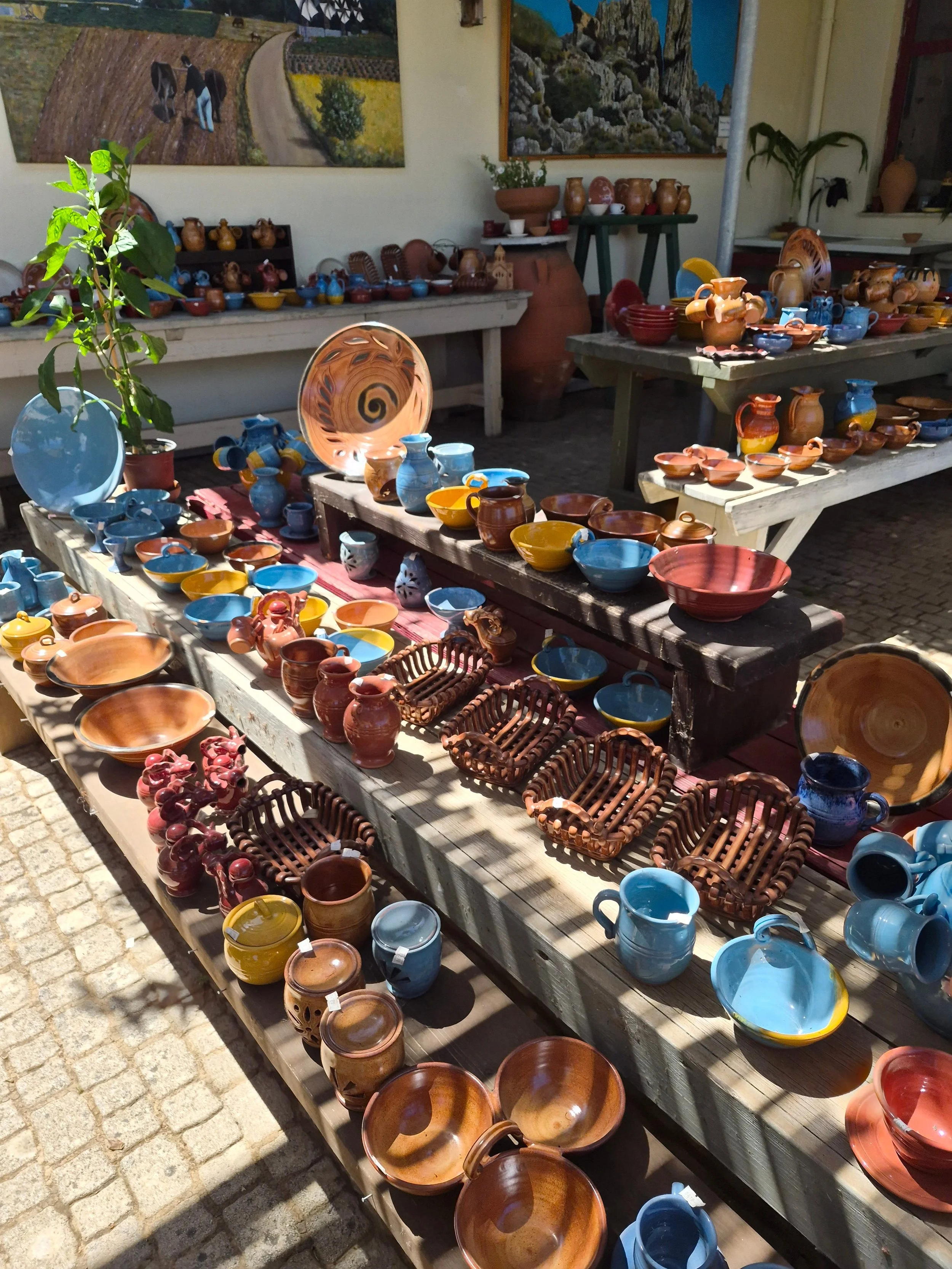
But pottery has been part of life in Crete for thousands of years. Techniques have changed, designs have evolved, and what we buy is rather different from the enormous vessels once used to store olive oil and grain, but the basic relationship between Cretan people, clay and craft remains.
A craft with an ancient history
Pottery has been part of life in Crete for thousands of years, and some of the island's most recognisable ceramic forms can be traced back to the Minoan period.
The Minoans weren't making pottery simply because it looked nice. Ceramic vessels were practical objects, used to store food, water, olive oil and wine, while smaller pieces had more domestic or ceremonial uses. Pottery also gives archaeologists an extraordinary insight into how people lived, traded and interacted with other parts of the Mediterranean.
Some of the large storage vessels found in Crete are particularly impressive. The pithos (a large earthenware storage jar) could hold considerable quantities of olive oil, wine or grain. One traditional form of pithari is believed to have remained remarkably similar for thousands of years.
Their decoration can often reveal influences, materials, and artistic traditions, while the pottery itself can help archaeologists understand trade networks and connections between communities.
Of course, nowadays Cretan potters aren't simply recreating Minoan life. The craft has evolved, and modern-day workshops produce a wide range of pieces. Yet, there’s still a visible connection between today's pottery and the island's much older ceramic traditions. You only need to visit a Cretan pottery workshop to see it.
Thrapsano: the heart of Cretan pottery
If there is one place particularly associated with Cretan pottery, it is Thrapsano, a village in the Heraklion region.
Thrapsano has been described as the metropolitan centre of pottery in Crete, and pottery has traditionally been a hereditary profession there, with skills passed from parents to their children. The village's identity is so closely connected to the craft that even its name is thought to be linked to thrapsala – the shards of broken pottery found around the kilns.
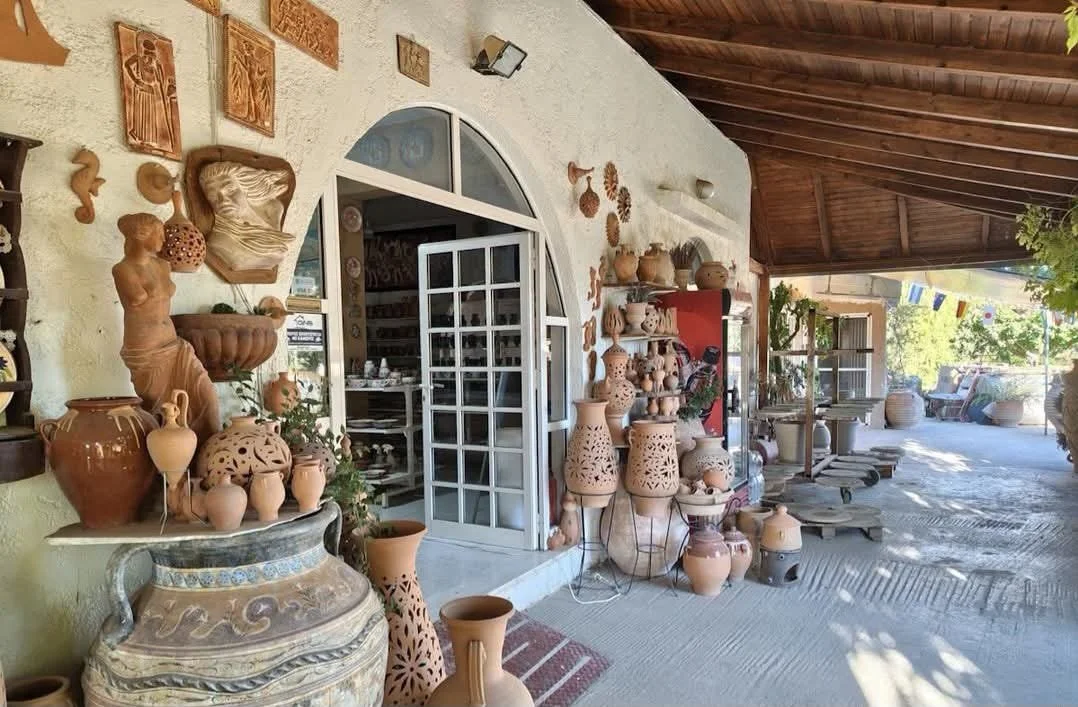
For generations, Thrapsano's potters were particularly known for their large pitharia. These weren't decorative garden ornaments, as many of us would recognise them today. They were essential household items.
There was also an unusual part of the traditional pottery trade known as vendema. Rather than making everything at home and attempting to transport huge, fragile pots around the island, groups of Thrapsano potters would leave the village during the spring and travel to other parts of Crete. Here, they'd set up temporary workshops where they could make pottery close to suitable sources of clay and water only to return home later in the year.
It is a lovely reminder that traditional crafts weren't necessarily as stationary as we might imagine them to be. The potters travelled to where the materials were to make their livelihood.
Today, workshops in Thrapsano still produce traditional forms alongside more contemporary ceramics, while newer initiatives such as the Minoan Pottery Centre and pottery school are helping to preserve and teach the techniques to another generation.
The result is a craft that isn't simply being kept behind glass as something from the past. It is still being made, used and adapted, making up an important part of Crete's culture and economy.
What makes Cretan pottery so distinctive?
For me, part of the appeal is simply the look of it.
Cretan ceramics are wonderfully earthy. Natural clay colours, warm terracotta’s, muted creams and darker tones sit alongside patterns inspired by nature and traditional design. You will often see shapes and decorative details that feel distinctly Mediterranean, while others have clear connections with ancient forms.
But the most appealing thing is this handmade pottery doesn't look completely perfect. There are slight variations in shape, marks in the clay, a difference in colour after firing or a tiny irregularity in the decoration isn't necessarily a fault. It is evidence that an actual person made the piece.
The techniques themselves are fascinating as well. At Keramion in Margarites, for example, ceramics are made using local Cretan earth and lepida, a particular type of potter's earth, alongside natural pigments from the mountains. Pieces can be polished with pebbles and decorated using a traditional sheep's-wool brush before being fired in a wood-burning kiln.
These aren't just aesthetic choices. They connect the finished object to the landscape around it – to the earth, materials and techniques of the place where it was made. There is a distinct sense of place built into it.
More than a souvenir
I'm always interested in the things we choose to bring home from travelling.
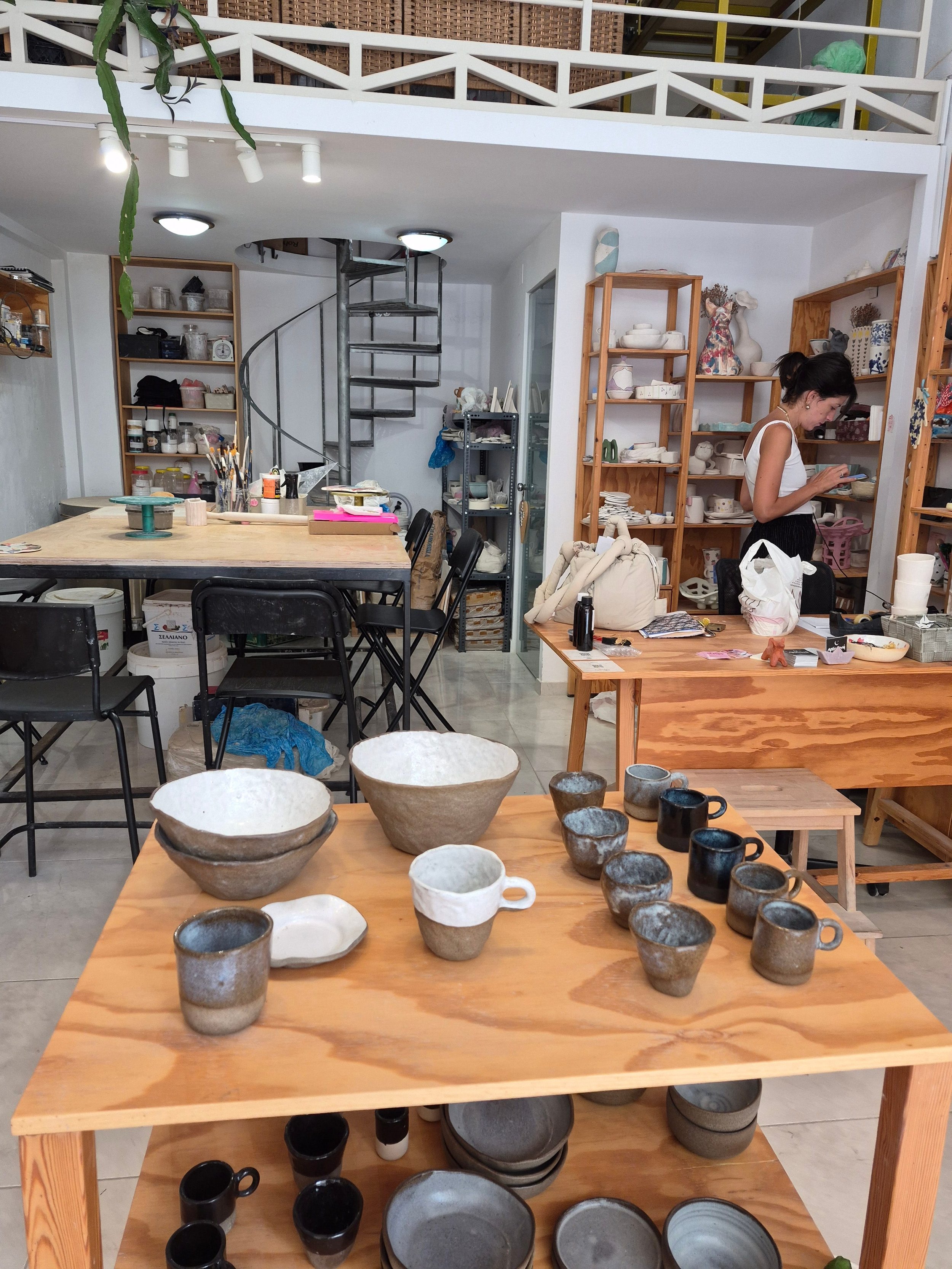
There are the obvious souvenirs: something with the name of the destination printed across it, a magnet, a keyring, perhaps something bought because you feel you probably should buy something before heading home. Then there are the things you buy simply because you genuinely like them.
Pottery falls rather neatly into the second category. It might be you see a bowl that immediately makes you think of the colours of the Cretan landscape. Or a little jug that would look just as good on your kitchen table in England as it did sitting on a shelf in a workshop in Crete.
Finding the best souvenir is about finding something you would have wanted anyway, which just happens to have a story, a memory or emotional connection attached to it.
That is one of the reasons I think handmade crafts make such lovely travel souvenirs. Years later, you might not remember exactly where you bought a fridge magnet, but you can look at a handmade bowl or vase and remember the dusty floor of the workshop, the shelves covered in ceramics, the smell of the kiln or the feeling of wandering around somewhere completely different from home.
There is also a practical side to buying from independent workshops. Buying directly from makers can therefore be a small way of supporting a craft that might otherwise struggle to compete with mass-produced souvenirs.
One of the things I love about travelling around Crete is that its history doesn't always feel confined to archaeological sites and museums.
Of course, standing among the ruins of Knossos or looking at ancient objects behind glass is an incredible way to connect with the island's past. But there is something rather special about seeing a craft that has survived, changed and adapted over generations. Someone is still taking earth, water and fire and turning them into something useful.
Crete isn't only found in its beaches, archaeological sites, mountains or food. Sometimes, you find it in the things people are still making with their hands.
Ready to start planning your own Cretan adventure?
Whether you’re dreaming of quiet villages, beautiful beaches, incredible food or a little bit of all three, I can help you turn the inspiration into a trip that’s completely your own.
