
Crete Chronicles: A guide to getting the most from Heraklion
I have to admit, Heraklion isn’t necessarily love at first sight.
When you picture Crete, you imagine whitewashed villages, turquoise water, bougainvillea-covered tavernas and impossibly pretty harbour views, designed to be Instagrammed.
Heraklion doesn’t fit that image; it’s busy. It’s urban. There is traffic, noise, modern concrete and high-rise hotels with strips of tourist-trap Irish bars and souvenir shops all selling the same thing.
However, the longer I stayed and explored, the more I loved it. Heraklion is a city you get to know the more you wander a little, find a café, turn down a side street, stumble across a Venetian building or ancient fragment, and gradually start to see what makes it interesting.
Even other travel writers acknowledge that Heraklion doesn’t have the immediately picturesque feel of places such as Chania or Rethymno. But that modern, energetic quality is part of its character.
So, if you’re flying into Heraklion and immediately heading for the nearest resort, here’s why I think you should give the city and surrounding villages more of your attention and time.
The Old City
Heraklion has a surprisingly lively street-art scene, with murals appearing across the historic centre and neighbourhoods such as Lakkos. It’s another little reminder that this isn’t a city trapped in its past.
Start around the Morosini Fountain, or Lions Square, a meeting point in the city for centuries. From there, wander towards the Venetian Loggia, through the pedestrianised streets and down towards the harbour. You’ll notice quickly how Heraklion is an odd mixture of old and new.
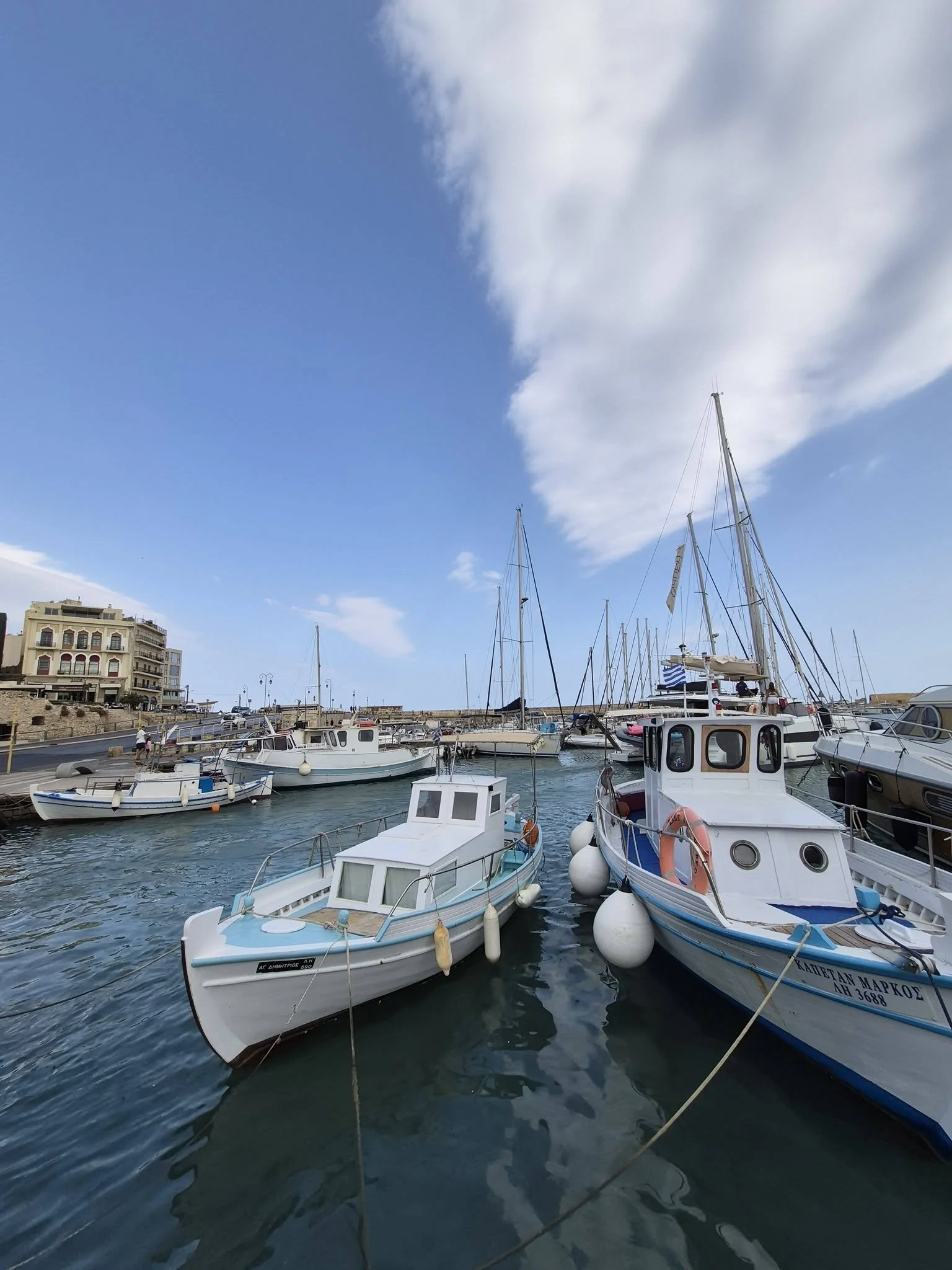
The city lost much of its historic Venetian architecture through earthquakes, war and redevelopment, so this isn’t a perfectly preserved old town, but it’s there.
Down at the harbour, the Koules Fortress sits at the water’s edge. The fortress dates from the early 18th century and was part of the city’s formidable defensive system. The history here is extraordinary: the Ottoman siege of Candia lasted around 21 years before the city finally fell in 1669. You can also walk along the harbour walls towards the lighthouse. It’s a lovely place to watch the city from a slightly different perspective, particularly around sunset.
The Minoan Period
You can’t really come to Heraklion without encountering the Minoans. The obvious place to start is Knossos, just outside the city, which you can get to by taking the dedicated No. 2 city bus from central Heraklion (near the harbor or Lions Square area) straight to the palace.
The archaeological site was the centre of Minoan Crete and dates back thousands of years. Many of the objects discovered there are now housed in the Archaeological Museum in Heraklion.
I would advise visiting both the Heraklion Archaeological Museum and the palace because the museum gives you the context that makes the ruins far more interesting. The pottery, jewellery, frescoes, and objects become more than old things behind glass with the knowledge and understanding of the role they played and their importance.
Knossos isn’t simply a perfectly preserved Minoan palace. Parts were extensively reconstructed by British archaeologist Sir Arthur Evans in the early twentieth century, using modern materials and his own interpretations of what the ancient buildings might have looked like, something that remains controversial even today.
Come hungry
Cretan food isn’t particularly complicated, and I mean that as a compliment. It’s about good ingredients, olive oil, vegetables, herbs, cheese, meat, seafood, and things that don’t need much interference. Order dakos, kalitsounia, apaki, local cheeses, wild greens and anything involving Cretan olive oil. If you’re near the coast, eat seafood.
To drink, the local wine or beer is the obvious option, but you’re missing out if you dont try tsikoudia. Rakie is Greek, but tsikoudia is and has a habit of appearing at the end of a meal whether you asked for it or not.
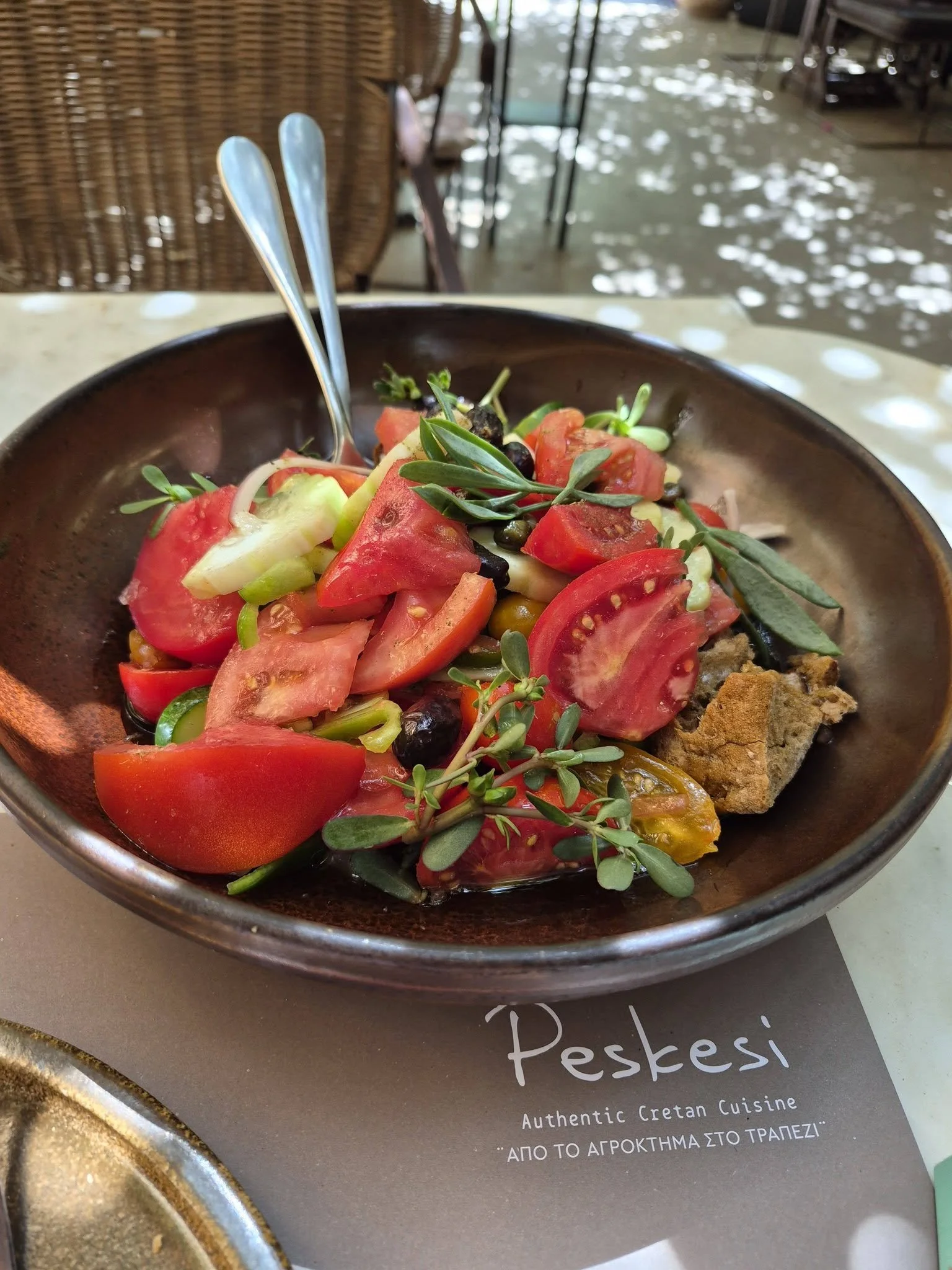
When visiting Crete, you should take the time to sit down properly and let lunch and coffee take longer than you intended. A freddo cappuccino isn’t something to drink hurriedly while marching towards your next attraction. Sit with it, watch people pass, engage in conversation.
The city’s cafés and tavernas are a huge part of its social life, particularly around the historic centre, which becomes noticeably livelier as the evening progresses.
The Markets
1866 Street is Heraklion’s vibrant traditional market. This lively street is a feast for the senses, offering an array of Cretan products that are sure to delight.
As you stroll through, you’ll come across stalls and shops selling everything from rich Cretan olive oil, local wines, and a variety of cheeses to fragrant herbs and other treasures of the island’s fertile land. Alongside the food vendors, traditional cafés pop up, inviting you to take a break and enjoy a coffee or a snack in an authentic setting.
But the experience doesn’t stop with food. The market is also a place to discover other traditional Cretan crafts, like beautifully woven baskets in all sizes. You’ll also find plenty of shops offering clothes, shoes, handbags, and even toys—something for everyone.
Whether you’re after a taste of Crete or simply want to soak in the local atmosphere, this bustling market street is the perfect spot to explore and discover what locals buy on the daily.
Beyond Heraklion City Centre
One of my favourite things about using Heraklion as a base is that you can be in the middle of a busy city and, not particularly long afterwards, find yourself surrounded by vineyards, olive groves and mountains.
Archanes is a lovely example. The village is surrounded by wine country and is known for its traditional architecture, colourful streets and slower pace. It’s the sort of place where the correct itinerary is essentially: walk around, eat something, have a drink and see what happens.
The vineyards around Peza and Dafnes offer another side of the region, particularly if you’re interested in Cretan wine.
If you really need a beach day, Agia Pelagia and Mononaftis give that classic Cretan combination of sea, sunshine and somewhere to sit with a cold drink. Ammoudara is also close to the city if you don’t want to travel far.
You can go further, too. Chania, Rethymno, Matala, Agios Nikolaos, Elounda and the Lasithi Plateau are all possibilities depending on how long you’re staying, but don’t need to turn your holiday into a military operation.
Experiences Around Heraklion
One of the things I like most about staying in Heraklion is that you don’t have to travel particularly far to feel as though you’ve left the city behind.
Within an hour or so, the landscape changes dramatically. Vineyards replace apartment blocks. Olive groves stretch up the hillsides. Mountain villages appear around corners, and suddenly you’re eating lunch somewhere that feels a world away from the busy streets of Heraklion.
If you have a few extra days, I’d make time for at least one experience that takes you into this landscape.
Wine Tasting in the Countryside
Crete has been making wine for thousands of years, and the countryside around Heraklion is one of the island’s main wine-producing areas. You don’t need to be a serious wine enthusiast to enjoy it either. In fact, I think it’s one of the best ways to spend an afternoon.
There are several wineries within easy reach of Heraklion. At Douloufakis Winery in Dafnes, you can tour the winery and taste six wines, including indigenous Cretan varieties such as Vidiano and Liatiko. They also offer a vineyard tasting, where wine is served alongside Cretan cheese and rusks.
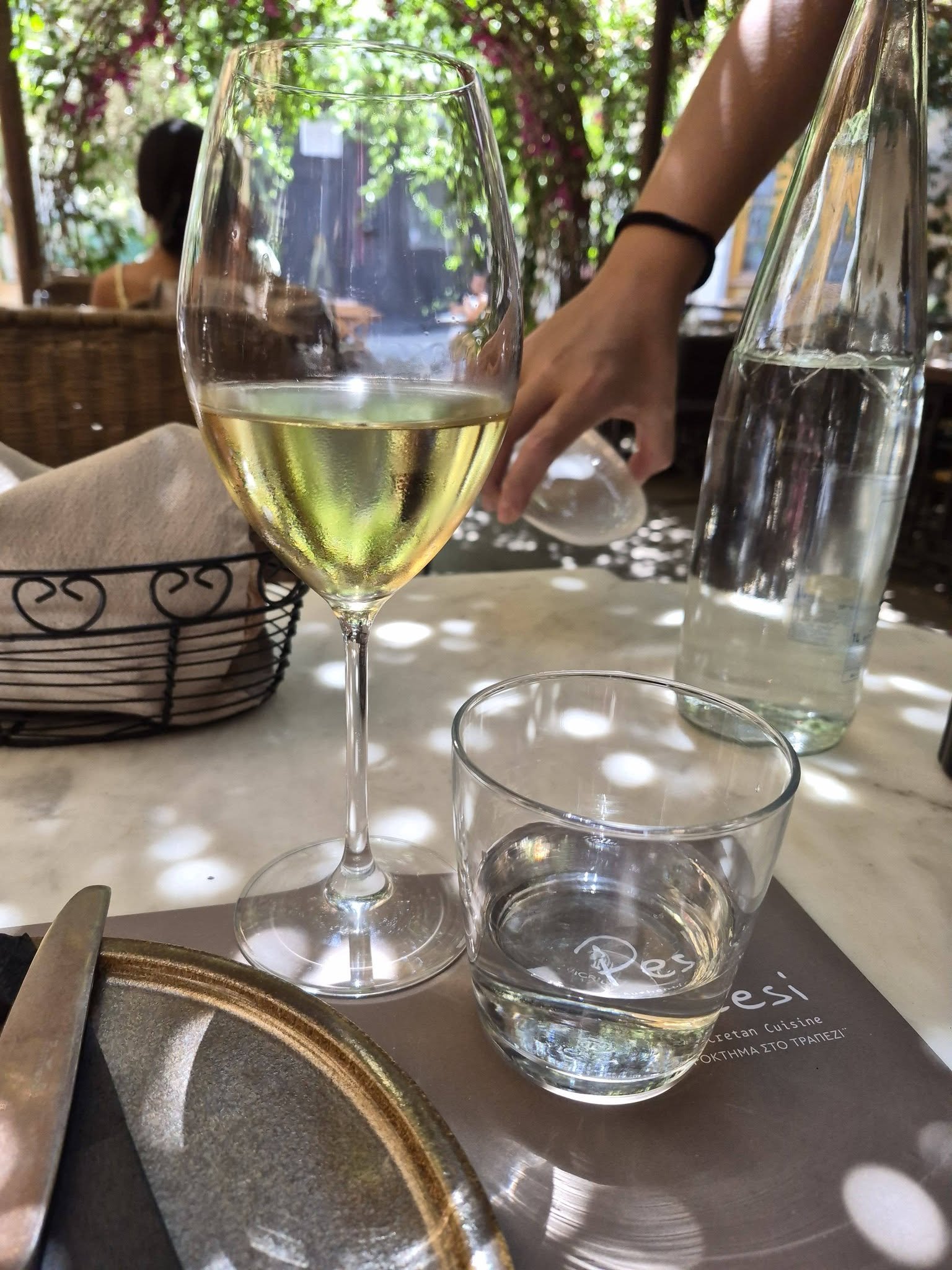
Another option is Lyrarakis Winery, in the hills around Alagni. The setting is particularly lovely, with vineyards looking towards the Lasithi mountains, and you can combine wine tasting with an olive oil tasting or even a vineyard picnic.
Olive oil tasting
Olive oil is so deeply woven into Cretan life that it’s easy to overlook just how interesting it actually is. You can, of course, buy a bottle in almost any shop, but tasting different oils side by side and learning what you’re actually looking at somewhere like Olive Green Estates makes you see the ingredient differently.
Peskesi’s organic and regenerative farm outside Heraklion offers guided experiences through its olive groves, vegetable gardens and farm, as well as olive oil tastings and food pairings. Its dedicated olive oil experience also includes a visit to the farm’s old olive mill.
Take a Trip to Zeus’ Cave
For something completely different, head inland towards the Lasithi Plateau and the Dikteon Cave, better known as Zeus’s Cave.
According to Greek mythology, this is where Zeus was born and hidden from his father Cronus. The cave sits above the village of Psychro, surrounded by the mountains of the Lasithi Plateau. The journey there is part of the experience: you’ll pass mountain villages, farmland and the remains of the famous windmills that once covered the plateau.
The Municipality of Lasithi’s guide to the Cave of Zeus has useful information about the cave and the walk up from Psychro.
If you don’t have a car, there are organised excursions from Heraklion that combine the cave with mountain villages, olive farms and traditional tavernas. Adventure Crete runs a small-group Land Rover trip that combines the cave with the Lasithi Plateau and lunch at a mountain taverna.
Get Out on the Water
Just off the coast is the small island of Dia, a protected Natura 2000 site roughly seven nautical miles from Heraklion. Several sailing companies run trips there from the Venetian port, ranging from half-day and sunset cruises to private full-day trips.
Sailing Dia offers half-day, full-day and sunset sailing trips from Heraklion, while Cretan Yachts runs a 5.5-hour Dia Island sailing trip with swimming and snorkelling.
This would be high on my list for a hot summer day. There is something particularly nice about seeing Heraklion from the water, rather than spending another afternoon walking around it.
Go Off-Road
Various 4x4 and Land Rover excursions take you from Heraklion, often combining mountain tracks with villages, olive groves, local food and viewpoints that you wouldn’t reach on a conventional sightseeing bus.
The Lasithi Plateau safari is one example, taking you through the Dikti Mountains and the farming landscape around the plateau.
I’d look for a smaller group rather than one of the huge coach-style excursions. The appeal of doing this isn’t simply getting off-road. It’s being able to stop somewhere because there’s a particularly good view, pull into a village for coffee or spend a little longer somewhere that catches your attention.
Smaller Beaches and Coves
Some of the nicest days around Heraklion can be as simple as hiring a car, packing a towel and driving along the coast until you find somewhere that looks inviting. The north coast is dotted with smaller beaches and coves, while heading further south takes you towards a wilder, quieter stretch of Crete.
You could spend the morning exploring a village or archaeological site, stop for lunch somewhere inland and finish the afternoon swimming in a small coastal cove.
So, should you visit Heraklion?
I don’t think Heraklion is necessarily the place you’ll fall in love with from straight away. It’s not polished, and it isn’t as beautiful as some of Crete’s other destinations.
But my favoruite thing by far about Heraklion is the blend of ancient and modern Crete, with Venetian architecture, the preservation of food and culture, and the wealth of ancient Minoan artifacts that still exist, showcasing the island’s history.
Heraklion is such a useful base because you don’t have to choose between history, food, nature, and the sea. In Heraklion, they’re all remarkably close together.
