
See Sofia Differently: A Self-Guided Walking Tour of Communist Bulgaria
Sofia is a city of layers.
Ancient Roman ruins sit beneath modern streets, Orthodox churches stand alongside Ottoman-era buildings, and enormous government buildings reveal another, much more recent chapter of Bulgaria's history.
If you want to see Sofia differently, I recommend taking a walk through the city centre with its communist past in mind.
Between 1944 and 1989, Bulgaria was a socialist state under the dominance of the Bulgarian Communist Party. During those 45 years, Sofia was transformed, with monumental government buildings, new housing, cultural centres and wide public spaces designed to reflect the ideology and power of the new state.
Today, much of that architecture remains, although its meaning has changed. Some buildings have been repurposed, some monuments have disappeared and others remain politically controversial.
This self-guided route takes you through some of the most significant places connected with that history, while leaving plenty of time for coffee, food and exploring along the way.
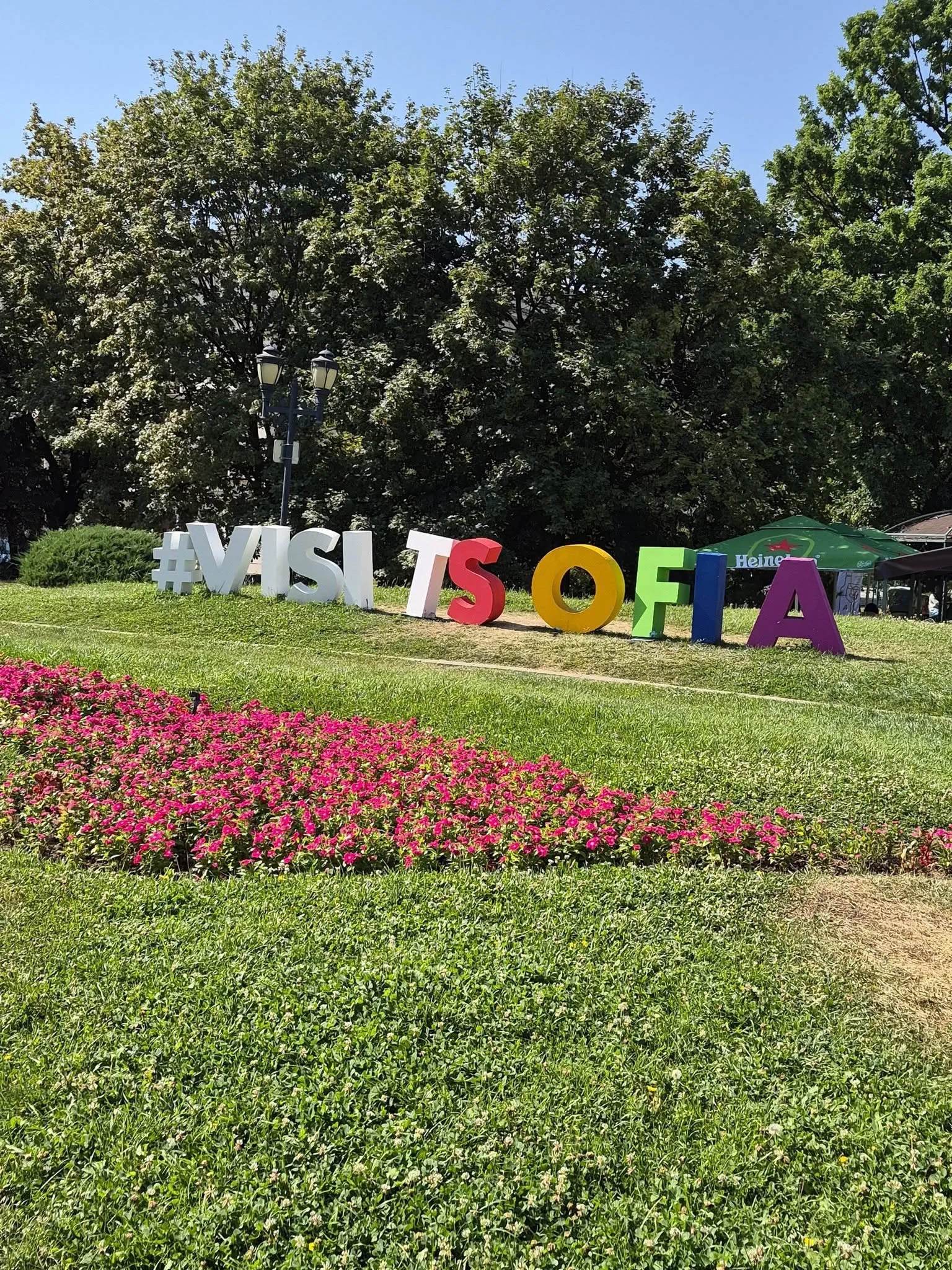
The route at a glance:
Start: Sofia City Court
Finish: National Palace of Culture (NDK)
Distance: Around 3–4km
Allow: Approximately 3 hours, including stops
Cost: The walking route itself is free
Best for: History, architecture and anyone wanting to see a less obvious side of Sofia
This communist walking tour uses Sofia City Court as the starting point and NDK as the finish, so this route follows the same general journey while allowing you to explore independently.
Before you set off:
What should you wear?
This is an easy city walk rather than a hike, but comfortable trainers or walking shoes are a must. You'll be walking across pavements, squares and some uneven surfaces, and it's much easier to enjoy the history when you're not thinking about your feet.
Sofia can get very hot in summer, so bring:
Comfortable walking shoes
Water
Sunglasses and sun cream
A hat in warmer months
A light layer for cooler mornings and evenings
You'll also pass several Orthodox churches during your time in central Sofia. If you plan to go inside, shoulders and knees should be covered, particularly for women. Carrying a lightweight scarf or shawl is an easy solution in summer.
Do you need tickets?
The great thing about this route is that most of the important stops can be appreciated from outside and completely free of charge.
If you decide to add museums or galleries along the way, you'll need to budget separately for admission.
For example, the National Gallery's Palace currently costs €8 for adults, while the National Gallery's Museum of Socialist Art is €8.
Stop 1: Sofia City Court
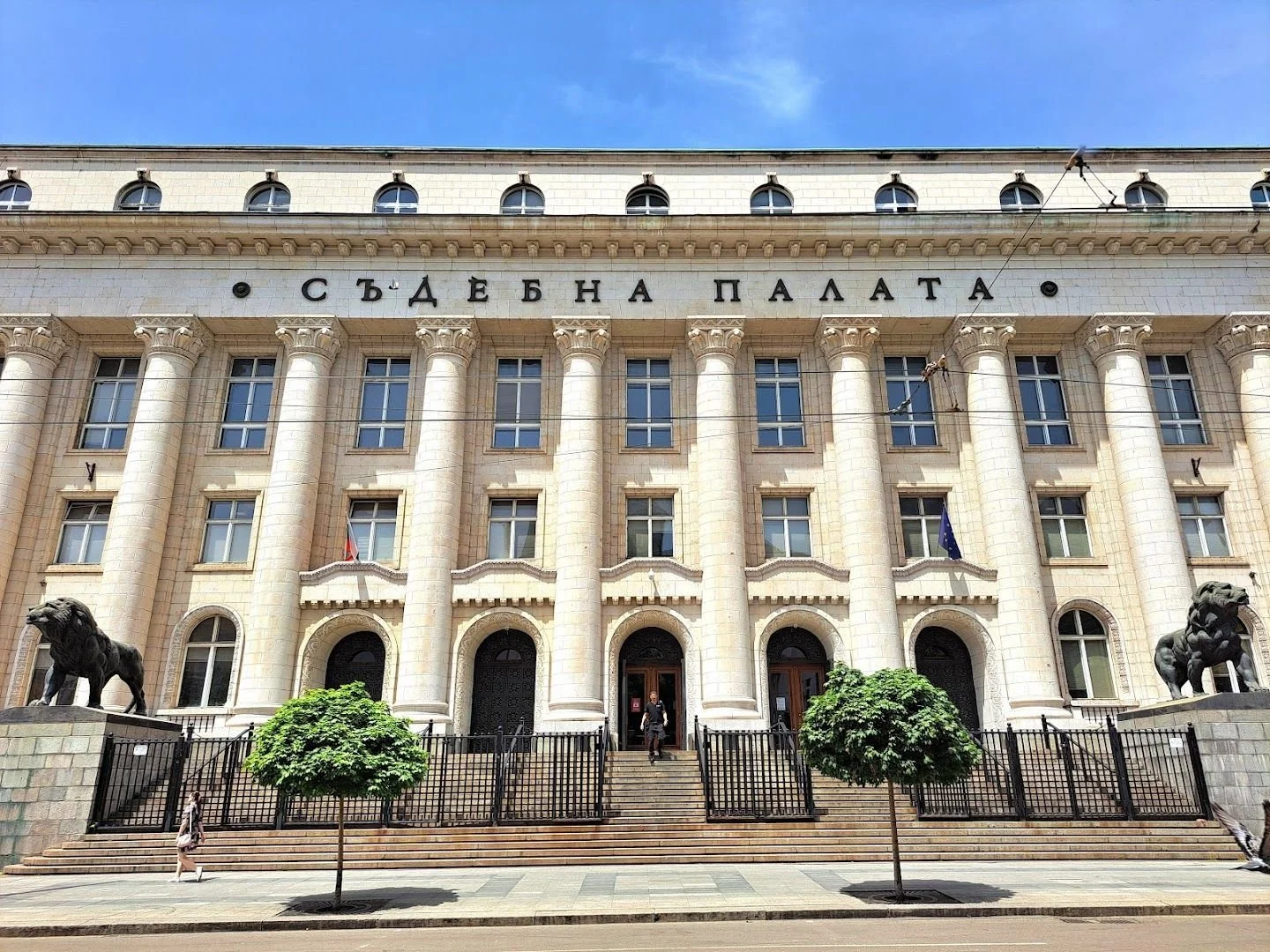
The impressive white Palace of Justice, guarded by two enormous stone lions, was completed in 1940, just before Bulgaria entered one of the most turbulent periods in its modern history. At the time, Bulgaria was a monarchy and was aligned with Nazi Germany during the Second World War.
Everything changed in September 1944, when a coup brought a new government to power as Soviet forces entered Bulgaria. The monarchy was abolished in 1946 and Bulgaria became the People's Republic of Bulgaria.
The Communist Party gradually consolidated its control over politics, the economy and wider society.
This is a useful place to begin because you're looking at Sofia before the city was dramatically reshaped by communism.
Lauren's tip: If you haven't had breakfast yet, grab a coffee around Vitosha Boulevard before setting off. You'll be heading into a part of Sofia where you'll want to stop and look rather than constantly search for somewhere to eat.
Stop 2: St Petka Samardzhiyska Church
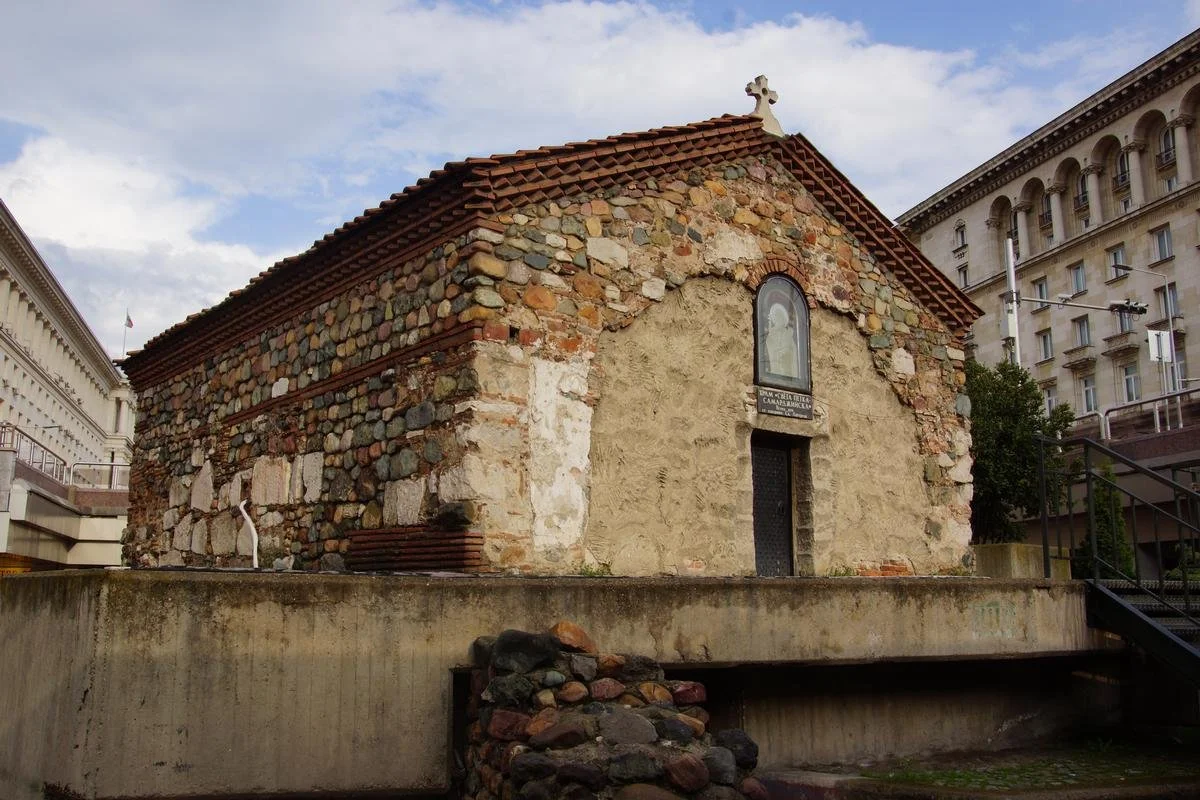
Make your way towards the centre and stop at this tiny medieval church, tucked almost underneath the modern city. Dating back to around the 11th century, St Petka survived Ottoman rule, the development of modern Sofia and eventually the communist period.
Religion occupied a complicated place in communist Bulgaria. The state was officially atheist and religious institutions were heavily controlled, while religious practice was pushed out of public life. But religion didn't simply disappear. Churches remained open and many people continued to practise their faith privately.
The contrast here is striking. In a few minutes, you'll go from a tiny medieval church to some of Sofia's most monumental socialist architecture.
Entry: The church is currently listed as free to visit.
What to wear: If you go inside, dress respectfully with shoulders and knees covered.
Lauren's tip: This is one reason I always recommend carrying a lightweight scarf when exploring Sofia. It can double as sun protection and something to cover your shoulders when entering churches.
Stop 3: The Largo
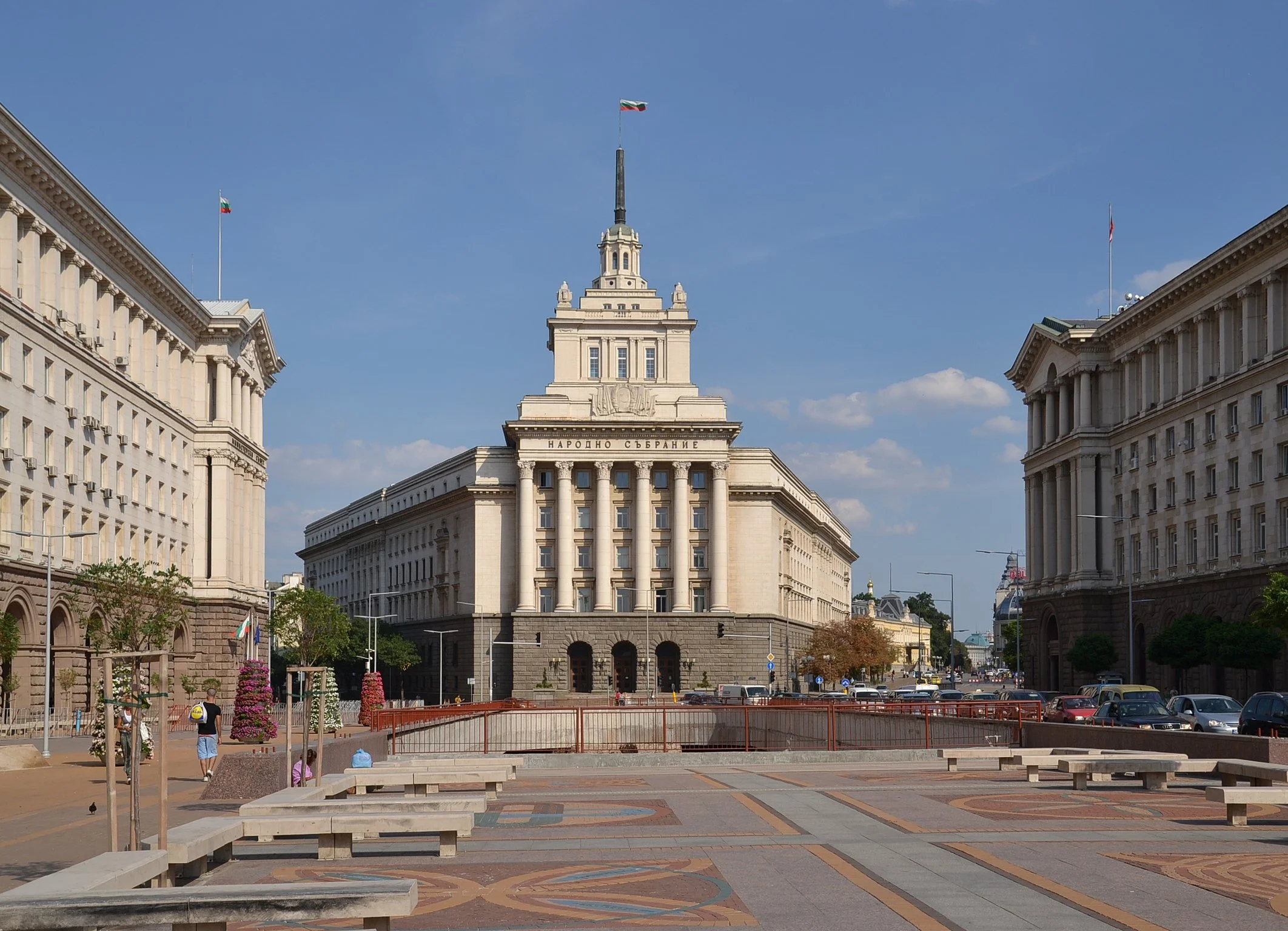
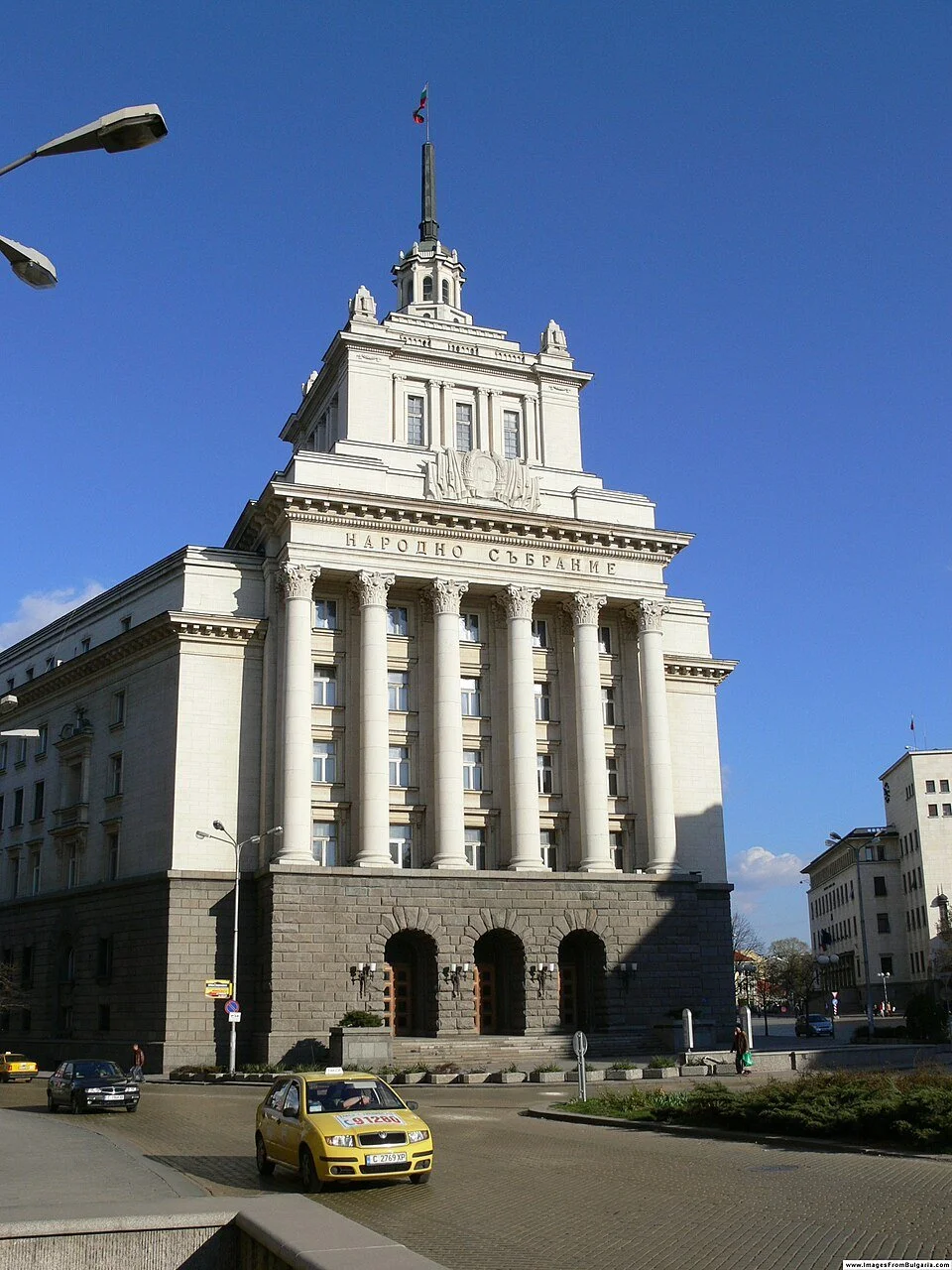
Continue towards the enormous square known as The Largo. This is the architectural centrepiece of communist Sofia, surrounded by the former Communist Party Headquarters, the Presidency and the Council of Ministers.
After the Second World War, Sofia was being rebuilt and modernised. But the new government wasn't simply repairing the existing city. It wanted to create a capital that reflected its new socialist identity.
The buildings constructed here during the 1950s are monumental, symmetrical and deliberately imposing.
Look at the scale of them. This was architecture designed to communicate power, permanence and order.
The former Communist Party Headquarters
The enormous building dominating the Largo was once the headquarters of Bulgaria's Communist Party. Today, it forms part of the National Assembly complex.
The famous red star that once sat on its roof has disappeared, but the building remains. It's a good example of one of the recurring themes you'll notice throughout this walk: Sofia hasn't simply erased its communist architecture. In many cases, it has given it a new purpose.
Lauren's tip: Stand in the middle of the Largo rather than photographing the buildings individually. It's the scale of the whole ensemble that makes this place impressive.
Stop 4: State Security
From the Largo, continue towards the former State Security investigation facilities.
Darzhavna Sigurnost, or State Security, was Bulgaria's secret police and security apparatus. It monitored people considered politically unreliable, including dissidents, intellectuals, journalists and religious figures. Informants and surveillance became part of everyday life, and those who opposed the regime could face imprisonment, interrogation or forced labour.
This is one of the less visually impressive stops, but perhaps one of the most important. The monumental buildings of the Largo show you the visible power of the state. State Security represents the invisible side.
You can't see surveillance in the same way you can see a government building, but the knowledge that you might be watched could influence what people said, who they trusted and how openly they expressed their opinions.
Stop 5: Georgi Dimitrov's Mausoleum & the former Royal Palace
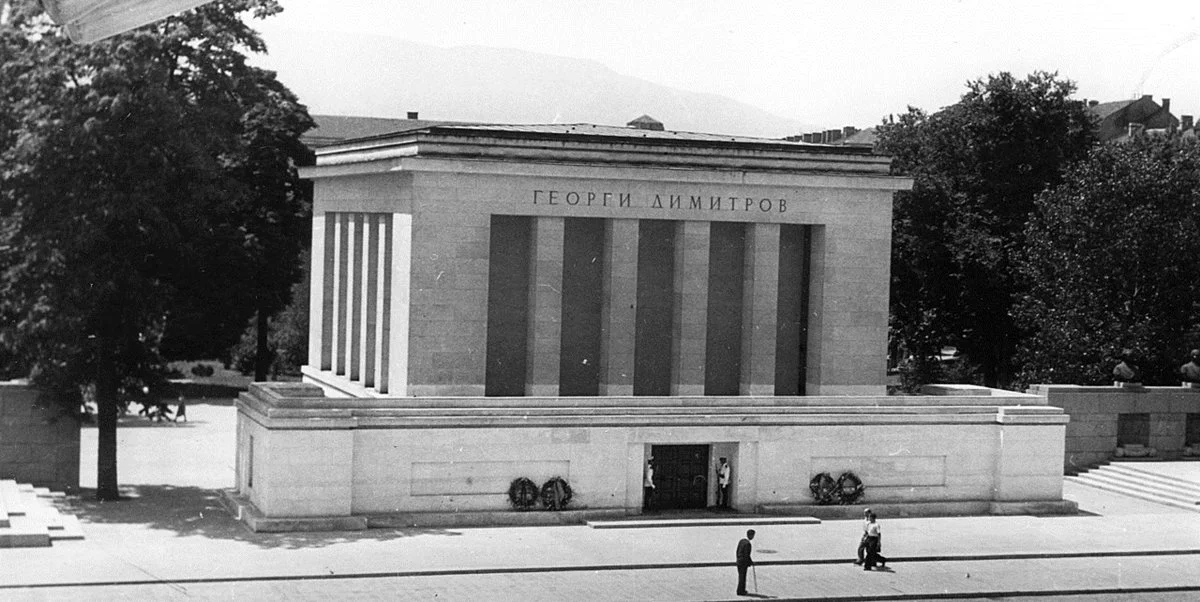
Continue towards Prince Alexander of Battenberg Square. Today, you'll find an open space where the Georgi Dimitrov Mausoleum once stood.
Dimitrov was one of the most important figures in Bulgarian communism and became the country's first communist prime minister. When he died in 1949, his body was embalmed and placed in a specially constructed mausoleum here. For decades, it became one of the most powerful symbols of the communist regime, hosting political ceremonies and parades.
After the fall of communism, however, the mausoleum became a symbol of a past Bulgaria was trying to move away from. It was eventually demolished in 1999, after several attempts to bring the building down. Today, there's almost nothing left, and that is exactly what makes this stop interesting.
Just nearby is the former Royal Palace, now home to the National Gallery. The monarchy was abolished in 1946, and the palace was repurposed under the new political system. Two buildings, two very different political eras, and both transformed by the changing face of Bulgaria.
Lauren's tip: If you're interested in art, the National Gallery is worth returning to separately rather than trying to squeeze a full gallery visit into this walk.
Stop 6: Hotel Rila
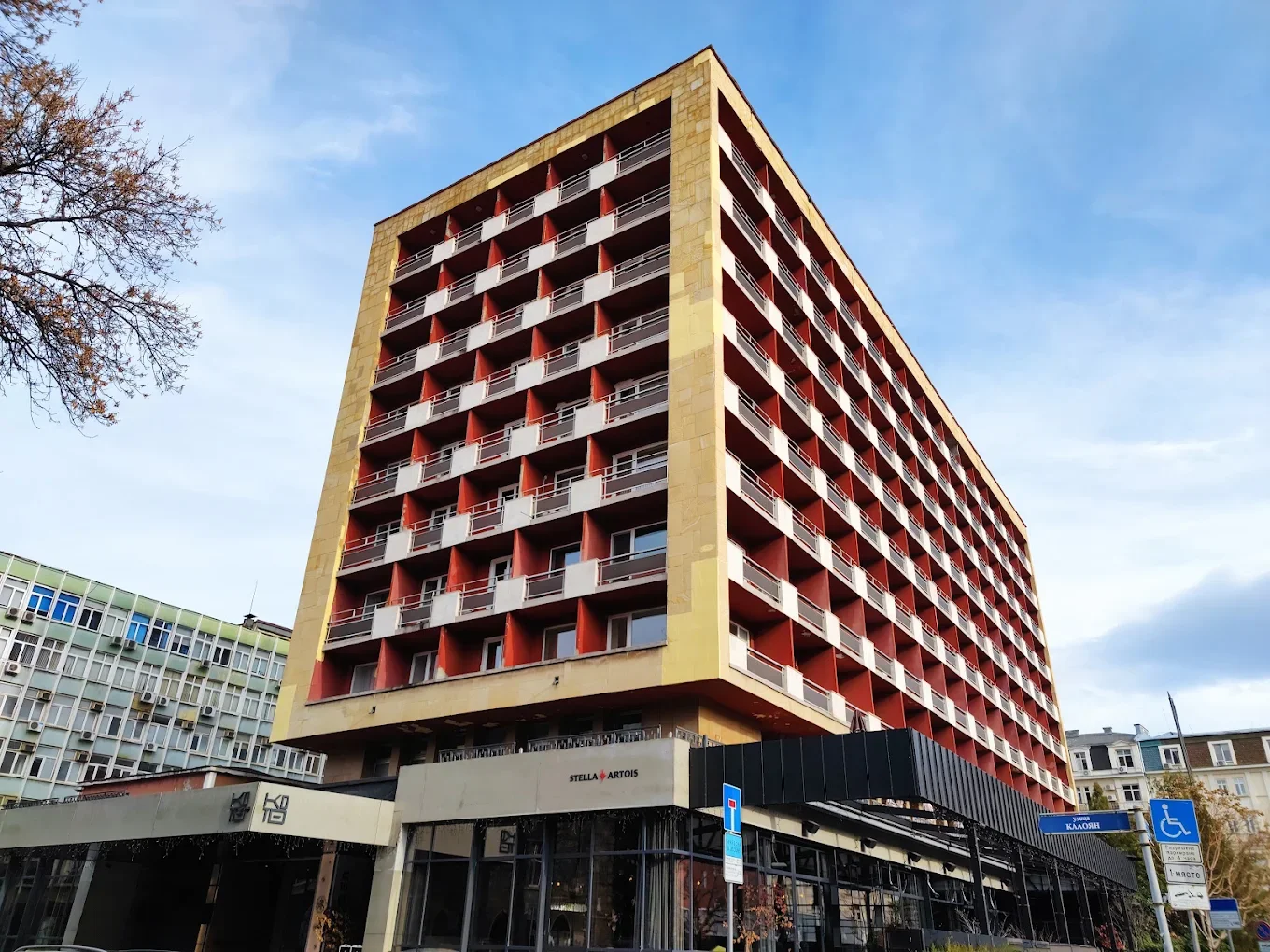
Continue towards the Rila Hotel, which opened in 1961. The hotel is a good example of the more modernist architecture that developed during the socialist period.
This is also a useful point to remember that life under communism wasn't simply a story of repression. The government invested heavily in housing, education, healthcare, industry and infrastructure. Employment was widely available and urbanisation accelerated as people moved from rural areas into cities.
At the same time, there were severe political restrictions, shortages of some consumer goods, limited choice and extensive state control. For many people who lived through the period, memories are therefore complicated. Someone might remember secure employment and affordable housing while also remembering censorship or restrictions on travel. Both experiences can exist together.
Lauren's tip: If you need a coffee break, Rila's central location makes it a convenient place to pause before continuing.
Stop 7: The Soviet Army Monument site & Victims of Communism Memorial
Your next stop takes you into one of the most politically sensitive parts of Sofia's recent history.
The Monument to the Soviet Army, erected in 1954, became increasingly controversial after the fall of communism. For some Bulgarians, the Soviet Army represented liberation from Nazi influence. For others, its arrival marked the beginning of decades of Soviet domination and communist dictatorship.
The monument was repeatedly vandalised and became a focus for political debate before its dismantling began in 2023. So while the monument itself has gone, the site is still worth seeing. It demonstrates that Bulgaria's communist history isn't simply something preserved in museums. The country is still debating how that past should be remembered.
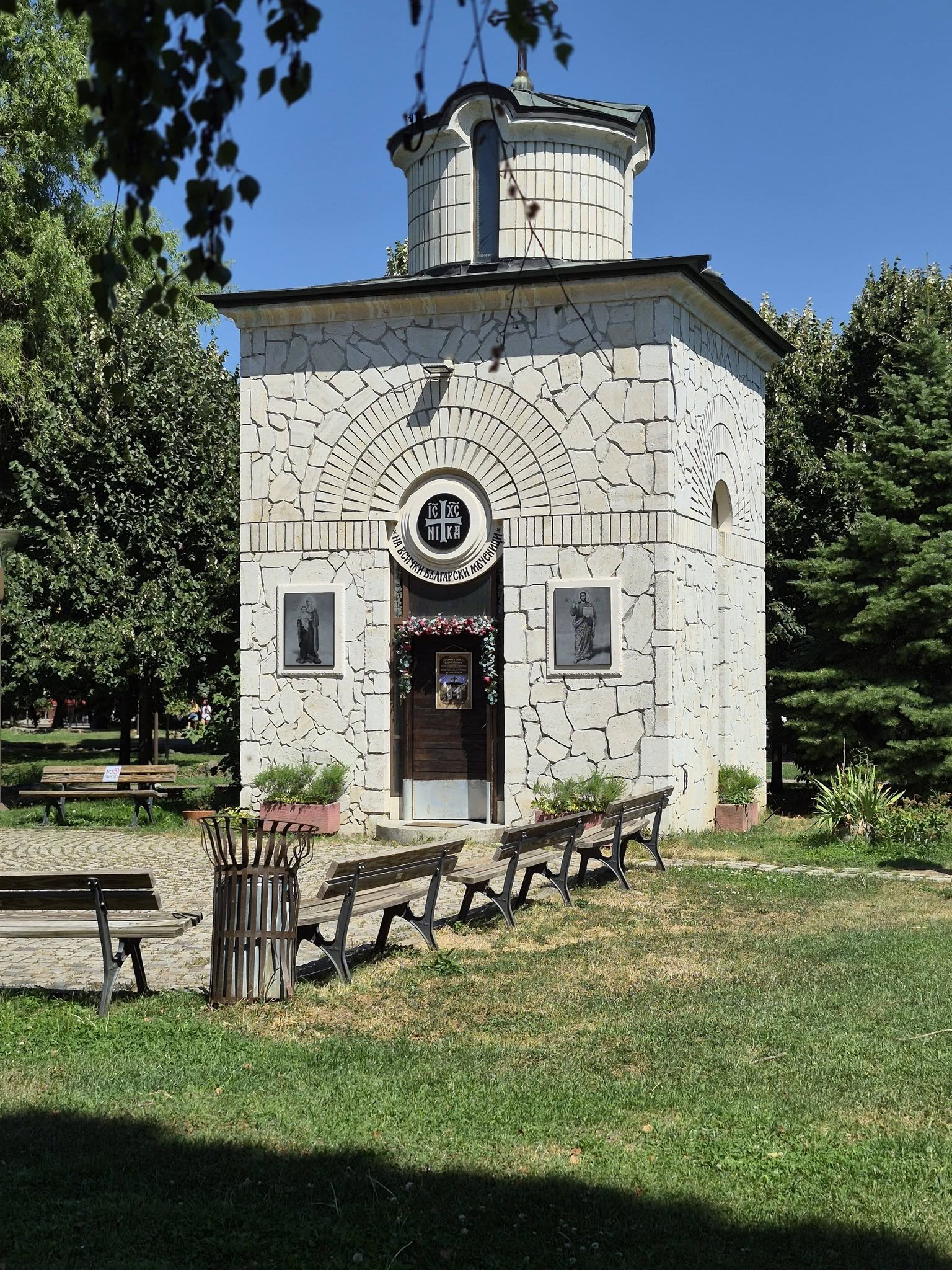
Nearby, the Memorial to the Victims of Communism offers the other side of the story, commemorating those who suffered or died through political repression, imprisonment and forced labour.
Take a few minutes here. This is probably the point on the route that deserves the most quiet reflection.
Stop 8: National Palace of Culture
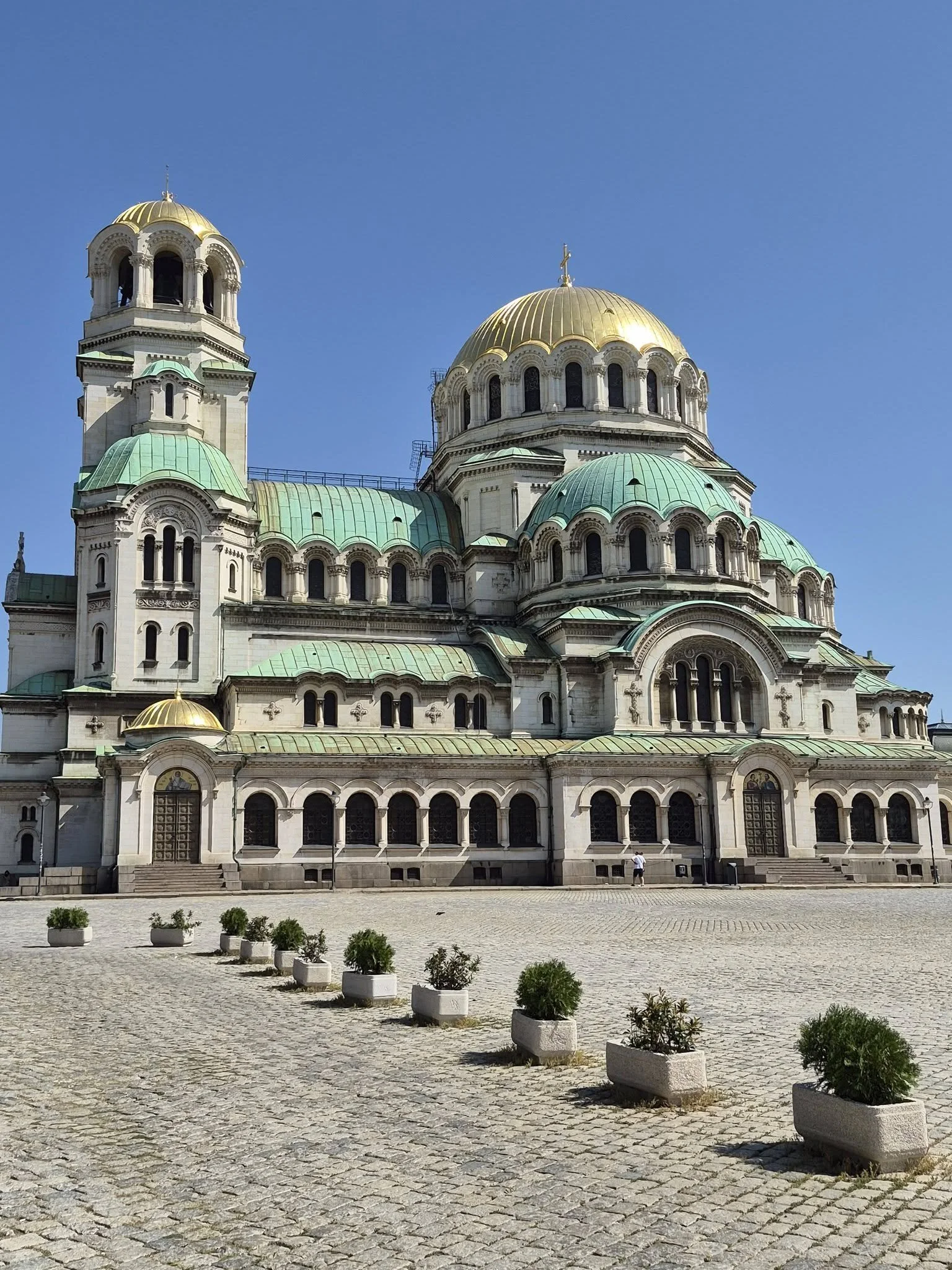
Finish your walk at the enormous National Palace of Culture, or NDK.
Opened in 1981 to coincide with celebrations of Bulgaria's 1,300th anniversary, the complex was designed to demonstrate the achievements of late socialist Bulgaria. It was intended to be a centre for culture, conferences, concerts and major political events.
Its scale is extraordinary and yet, just eight years after it opened, the political system it represented began to collapse.
Todor Zhivkov was removed from power on 10 November 1989, marking the beginning of Bulgaria's transition away from communist rule. The NDK, the Rila Hotel and the Largo all remained. So did the city of Sofia.
That's perhaps the most interesting thing about walking through communist Sofia: the regime disappeared, but the physical city it created didn't.
Where to eat and drink after
Finishing at NDK puts you in a great position for food and drinks.
Vitosha Boulevard is an easy option if you want plenty of choice, from casual cafés to restaurants and bars.
For something more traditionally Bulgarian, Momaor Shtastlivetsa near Vitosha Boulevard is worth considering. Or, if you're looking for somewhere more contemporary, Made in Blue is another option in the central area. Social Cafe is great for a lunch spot, and if you’re looking for something really affordable, fast, and a favourite with the locals, head to the Jewish Quarter to Supa Bar. You’ll find lots of cool coffee shops around this area if you need caffeine and some quiet time.
My advice? Don't plan your lunch too rigidly. There’s plenty of places on the route, so stop when you find somewhere that catches your eye.
My tips for making the most of the walk
👟 Comfortable shoes are essential. You'll cover several kilometres and spend plenty of time standing.
💧 Take water. Especially in summer.
⛪ Keep a scarf in your bag. It makes visiting churches much easier.
☀️ Start early in summer. The Largo can feel very exposed during the hottest part of the day.
📸 Look up. Some of the most interesting architectural details are above street level.
🗺️ Save the route before you leave. Sofia's centre is walkable, but some of the pedestrian areas and large squares can be surprisingly easy to navigate incorrectly.
⏰ Don't rush. Three hours is a good starting point, but give yourself longer if you want to visit the National Gallery or stop for food.
See a different side of Sofia
Sofia's biggest attractions are worth seeing, but I think some of the most interesting experiences come from understanding why the city looks the way it does.
This walk takes you beyond the usual sightseeing trail and into a chapter of Bulgaria's history that still shapes the capital today. That's exactly the sort of thing I look for when planning tailor-made trips: not simply the attractions you can find on every first-page Google search, but the experiences, neighbourhoods, restaurants and stories that help you understand a destination.
If you're planning a trip to Bulgaria and want an itinerary built around your interests, travel style and the sort of experiences you actually enjoy, I'd love to help you create it.
So, why not get in touch to get started on pllanning your tailor-made trip!
